Side B After Midnight: How Record Shops Became Britain's New Listening Rooms
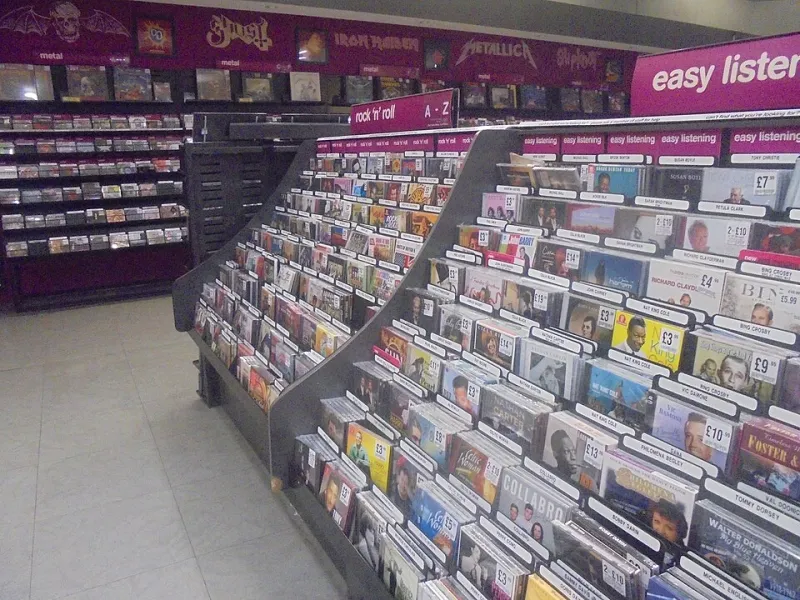
Photo: Mtaylor848, CC BY-SA 4.0, via Wikimedia Commons
At 11.45pm on a Thursday in Manchester's Northern Quarter, the shutters are down on the phone-repair shops and the pubs are doing last orders. Between a barber and a charity shop, a door with no sign is still open. Inside, twenty people are sitting in a narrow room, facing two speakers and a turntable. Nobody is talking. The record is Alice Coltrane's Journey in Satchidananda, and the room is a record shop that has quietly turned into a listening bar.
This is the new after-dark economy. Not a club, not a gig, not a pub with a DJ in the corner. A shop by day, a room by night, and a crowd that has come to do something radical in 2026: listen to an album from start to finish without scrolling, shouting or ordering a round of shots.
The shop that stays open for one more side
The model is simple on paper. A record shop with a licence, a small bar, some comfortable chairs and a sound system that has been chosen with more care than the cocktail list. After 9pm, the stock gets pushed back, the lights go down, and a full side gets played. Sometimes it is a new release. Sometimes it is a Blue Note reissue, a Cantonese pop classic, a dub record that makes the floorboards flex. The point is not rarity. The point is attention.
'We are not trying to be a club,' says Yasmin, who co-owns a shop-cum-bar in Bristol and asks me to use only her first name. 'We are trying to give people permission to sit still. That is surprisingly hard in a city centre. People come in and they do not know what to do with their hands. Then the second track starts and they settle.'
The rooms vary. In Leeds, a shop-bar with a capacity of forty feels like a living room with better records. In Margate, a couple of small Old Town bars have started hosting full-album nights with borrowed decks and a strict no-talking policy during side one. In London, the blueprint has been refined for years: Spiritland in King's Cross and Brilliant Corners in Dalston proved that audiophile culture could be a night out, not a hobby for men with expensive cables.
Why vinyl-only is more than a gimmick
Many of the new listening bars are vinyl-only, or close to it. That is partly a matter of sound and partly a matter of ritual. A record has a beginning, a middle and an end. It forces a room to commit. You cannot skip a track because the mood shifts. You cannot ask the bartender to put on something more upbeat. You are there for the side, and the side has its own logic.
'Vinyl-only is not about being precious,' says a DJ who runs a monthly listening night above a shop in Sheffield. 'It is about slowing the pace. If I play from a laptop, people expect me to be a jukebox. If I put on a record, they watch me do it. They hear the run-in groove. They wait. That tiny pause changes the room.'
Audiophile culture can sound intimidating, but the best of these rooms are not hi-fi showrooms. They are social spaces with a quiet rule. You can talk between sides. You can ask what the record was. You can buy it from the rack by the door. The bar is not the main event, but it is not an afterthought either. A good listening bar sells enough natural wine, lager and cold sake to keep the lights on, and not so much that the room turns into a pub.
The economics of one more side
None of this is easy money. A forty-capacity room cannot survive on beer alone. Many shops charge £5-£10 entry, or take a deposit that can be redeemed against a record. Some run ticketed album launches. Others make their margin on the shop during the day and treat the evening as marketing with a licence attached.
The costs are real: soundproofing, a premises licence, a designated premises supervisor, a decibel limiter, staff, insurance, and the slow work of convincing a council that a record shop playing one album at midnight is not the same as a nightclub. Neighbour-friendly sound is the key. That means no subwoofers after 11pm, absorption panels behind the speakers, a cap on volume, and a closing time that respects the flats upstairs. The best rooms are not quiet because they are boring. They are quiet because someone has done the work.
'The bar pays the rent; the listening room pays us back in regulars,' says the owner of a shop-bar in Manchester's Northern Quarter. 'We are not trying to compete with the clubs. We are trying to catch the people who want to go out but do not want to shout.'
That is the market. People who have spent the evening at a gig and want one more hour of music. People who have had a nice dinner and do not want the night to end in a Wetherspoons. People who live alone and want to be near other people without having to perform. The listening bar is a third space with a turntable.
A short trail for 2026
If you want to plot a route, start with the London originals. Spiritland in King's Cross is the polished version: serious sound, a proper bar, and a programme that moves from jazz to ambient to dub without ever feeling like a playlist. Brilliant Corners in Dalston is the intimate version: low light, big speakers, and a crowd that knows when to stop talking. In Leeds, Vinyl Whistle offers the shop-bar intimacy that makes the format feel local rather than imported. In Manchester, the Northern Quarter's shop-back rooms are worth following on socials, because the best nights are often announced late and sell out fast. In Margate, the Old Town's small bars have started experimenting with album listening nights and vinyl-only Sundays that stretch past midnight.
Call ahead. Some rooms are ticketed, some are free, some ask you to put your phone in a box. All of them work best when you arrive ready to listen rather than ready to be seen.
The ritual is the point
At 12.20am in Manchester, the owner lifts the needle and the room exhales. Someone asks what the record was. Someone else buys it. The bar closes in forty minutes. Nobody is in a rush. The night has not been built around a drop, a headline set or a photo opportunity. It has been built around a side of vinyl and a room full of people who agreed to pay attention.
That is the listening bar boom in one small scene. It is not a replacement for the club. It is a different kind of late-night culture, one where the music matters more than the cocktail list and the most rebellious thing you can do is sit down, shut up and let the record play.