Trucks, Tunes and Two A.M.: Britain’s Roller Rinks Are the New Dancefloors
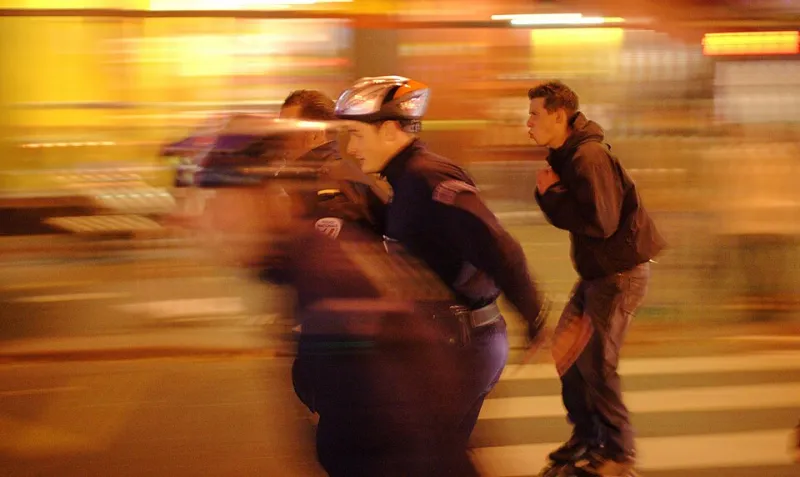
Photo: User:PeR, CC BY 2.5, via Wikimedia Commons
At 1.40am on a Saturday in Digbeth, the queue is not for a club. It is for a skate hire desk. Inside, a DJ is halfway through a garage set, the bass is doing something complicated to the floor, and a hundred people in rented quads are finding out that the best way to dance is to keep moving. Welcome to the late-night roller disco, Britain’s most unexpectedly sensible big night out.
The rink as a room with a release valve
Clubs ask you to stand your ground. Roller rinks ask you to find a line and hold it. That sounds like a small difference. In practice, it changes everything. You are not pinned to a spot near the speakers, trying to protect your drink and your personal space. You are in a loop. If you want to dance harder, you speed up. If you need air, you peel off to the side. If the tune is not for you, you can take a lap and come back.
That is why rinks across the UK are staying open past midnight in 2026 and turning ordinary sessions into full-blown discos. Birmingham, Glasgow, Manchester, Leeds and London all have promoters testing late licences, skate crews booking sound systems, and rinks discovering that their buildings were nightlife venues all along. Smooth floors, cloakrooms, a decent PA and a natural circuit: the roller rink has better bones for an after-dark crowd than plenty of clubs.
From birthday-party nostalgia to a proper late licence
Part of the pull is nostalgia. Everyone has a memory of a school trip, a birthday party, a wobbly first lap. But the new wave is not a novelty night. The crowd is mixed: first-timers in hire skates, veteran quad skaters with their own wheels, people who have not been on eight wheels since they were 12 and are surprised by how quickly it comes back. The music is not a jukebox of party hits. DJs are building sets around disco, house, garage, drum and bass and the kind of pop edits that make a room move together.
The timing makes sense. A club night can cost £20 before you have bought a drink. A late skate session is often cheaper, and you can do it sober without feeling like you are missing the point. In 2026, that matters. Nightlife is still expensive and still uneven. Rinks offer a lower-pressure way to be out late: you can move, you can talk, you can leave without having to fight through a crowd.
Birmingham, Glasgow and the new skater crews
In Birmingham, the late sessions have picked up a crowd that feels distinctly local: skaters from across the city, students, shift workers, people who want a Saturday night that does not end in a taxi queue at 1am. In Glasgow, the energy is gallus. The floor gets fast, the crews are loud, and the DJs know that a room of skaters will respond to a bassline in a way that a standing crowd sometimes will not.
What is happening in both cities is not just a rink thing. It is a nightlife thing. Skate crews are becoming promoters, DJs are learning how to read a moving floor, and venues are realising that an audience does not have to be standing still to be a dancefloor. The old hierarchy of club nights — queue, bar, booth, dancefloor — is being rearranged. At a rink, the dancefloor is the whole room. The bar is a pause. The cloakroom is a pit stop.
Bass you can feel through the floor
The sound is central. A roller disco lives or dies on its system. You need low end that travels through the floor and into the skates, but not so much that the room becomes a wall of noise. The best late-night rink sessions get this right: warm, punchy, clear. The bass gives you momentum. The highs keep you alert. The DJ can take you from a slow glide to a full-speed lap without losing the room.
That is why the music feels different from a club. You are not just hearing the track; you are negotiating with it. A breakbeat can become a rhythm for your feet. A house groove can stretch a lap into something like a dance. A garage flip can make a whole side of the rink move at once. The pleasure is not in standing under the speakers. It is in the glide.
The club crush problem, solved by a lap lane
The progressive case for the late-night rink is simple: it gives people more ways to be together without being packed together. Clubs can be brilliant, but they can also be loud, expensive, groped, cramped and impossible to leave quickly. A rink has edges. It has a slow lane. It has benches. It has a door you can find.
That matters for anyone who has ever felt like a night out was something to survive rather than enjoy. The late-night roller disco is not a sober night by default, but it is sober-friendly. It is not a queer night by default, but it is more queer-friendly than plenty of club floors. It is not a beginner’s night by default, but the best sessions make room for beginners. That combination is rare.
What still needs fixing
The renaissance is not frictionless. Skate hire can be a bottleneck. Not every rink is accessible, and not every late session has good public transport links. Floors need maintenance. Licences need negotiating. A late-night rink can also become a victim of its own success: too many people, not enough space, and a loop that turns into a traffic jam.
But the direction is right. Britain has spent years looking for nightlife that feels less like a crush and more like a choice. The late-night roller disco offers exactly that: a room full of people moving at different speeds, to the same bassline, with no need to stand still and pretend.
At 2am, the DJ drops something with a heavy low end and the whole rink leans into the turn. Eight wheels, one floor, no crush. It is not a throwback. It is a way forward.