Who Holds the Rope? The Quiet Power of Britain’s Late-Night Door Staff
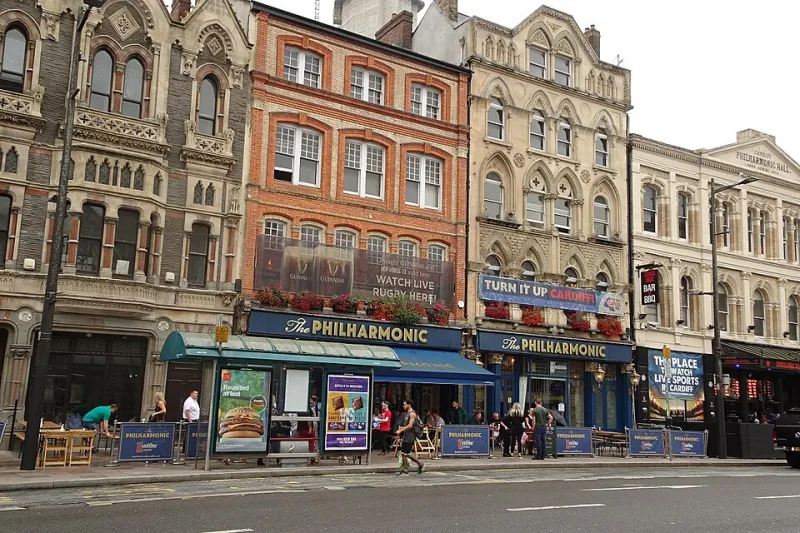
Photo: Sionk, CC BY-SA 4.0, via Wikimedia Commons
The door is the first review of the night. Before the DJ plays a record, before the bar staff pour a drink, the queue is already being read, sorted and judged. In 2026, the people working Britain’s thresholds are not just security in hi-vis. They are hosts, selectors, access workers, vibe technicians and, at their best, the most important curators in the building.
I have stood in enough queues to know that a bad door makes a room feel hostile before you have taken your coat off. A good door makes you feel like you have been expected, even if you are early, sober and slightly nervous. The difference is not magic. It is policy, training and personality, all pressed into the first thirty seconds of the night.
From muscle to manners
The old model still exists: earpiece, folded arms, a look that says ‘give me a reason’. It works for some venues, and there are nights where visible authority is the point. But the broader shift is towards something more nuanced. Door staff are freelancers moving between queer cabarets, basement clubs, warehouse parties and members’ bars. Promoters increasingly hire hosts as well as security, because the person who checks your name can set the temperature of the whole room.
That is not softness. It is labour. A good door worker is reading for intoxication, aggression, vulnerability and group dynamics while also remembering a guest list and explaining a house policy without making anyone feel small. They are doing risk assessment in real time, often while a stranger argues about a dress code that was never really about shoes.
The queer cabaret threshold
Queer cabarets are where the art of the door is most visible. The threshold is not a test of coolness; it is a promise that the room will be safer than the street. At a south London cabaret I visited earlier this year, the door host checked names, explained pronouns and house rules, and quietly redirected a group who had arrived to ‘see the show’ without any awareness of what kind of show it was. Nobody was humiliated. The door did its job.
That kind of work is invisible when it succeeds. It looks like a smile, a stamp, a quick question. It is actually a form of community protection. For trans and non-binary guests, for disabled guests, for anyone who has been made to feel like an inconvenience at the door, a clear and kind welcome is not a nicety. It is access.
Safety, bias and the dress-code alibi
We should be honest about the ugly side. Door policy can be biased. Dress codes have been used to exclude people by race, class and gender presentation. ‘We just know’ is not a policy; it is a hunch dressed up as taste. Racial profiling at the door is real, and so is the assumption that a disabled guest, an older guest or a sober guest is somehow not there for the right reasons.
A good door in 2026 has to be accountable. That means written policies, de-escalation training, clear banning procedures and a complaints route that does not disappear into a promoter’s DMs. It means access information that is easy to find and accurate. It means staff who understand consent and know how to support someone who asks for help, including through schemes like Ask for Angela, without turning that request into a spectacle.
Safety is not a dress code. Safety is a practice. It is the steward who notices a controlling group before the group becomes a problem. It is the host who checks in with the person sitting alone. It is the door worker who says no without turning it into a performance.
Atmosphere begins at the rope
The door sets the tempo. A tense queue makes a tense room. A chaotic door makes a chaotic night. A warm, firm, organised threshold tells everyone inside that someone is paying attention. That is why promoters should stop treating door staff as the last line of defence and start treating them as part of the creative team.
A good door can also shape taste. It can keep out the people who have come to gawk at a queer night. It can protect a basement club’s crowd from becoming a tourist attraction. It can say yes to the right stranger. That is curation, whether we like to admit it or not.
But curation needs transparency. If your door policy cannot be explained without a shrug and a vibe, it is probably carrying bias. The best venues can tell you who they want in, who they do not, and why. They can do it without cruelty. They can hold the rope and still hold the line.
The door is the dancefloor because everyone crossing it is already performing: the nervous first-timer, the regular, the group who have had too much, the person who just wants to hear one song. The people on the threshold decide whether that performance is met with care or contempt. In 2026, that is the real test of a night out. Not the lineup. Not the lights. The welcome.