Concrete Nightshade: Britain’s Car Parks Are Learning to Stay Up Late
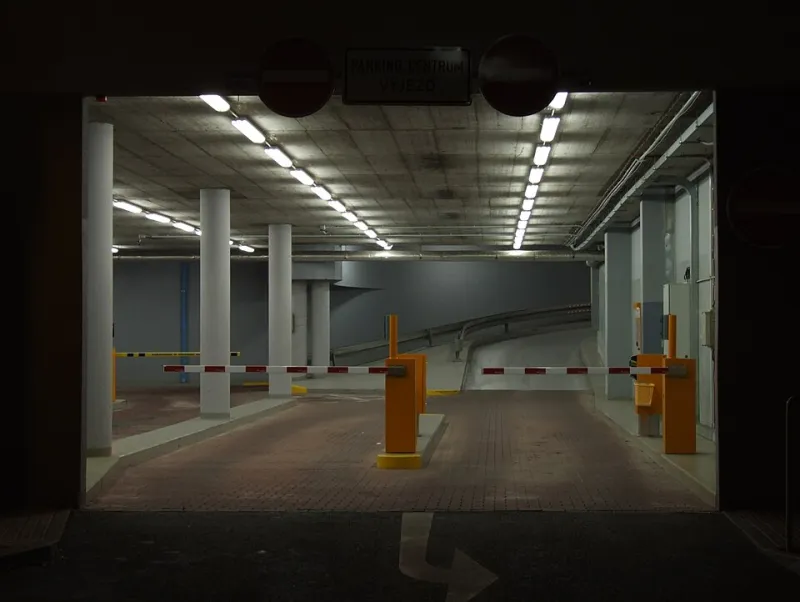
Photo: Pudelek (Marcin Szala), CC BY-SA 3.0, via Wikimedia Commons
It is 1.40am on a Saturday in Bristol and the bass is doing something strange to the stairwell. On level six of a city-centre car park, a crowd of several hundred is moving between pillars, past painted bay numbers, towards a makeshift stage. The city glows through the open sides. The air smells of rain and chips and slightly warm concrete. Nobody is queuing for a velvet rope because there isn’t one.
This is not a throwback to the free-party era, although the ghost of it hangs around the ramps. It is part of a quieter, more licensed revival: the multi-storey car park as a legitimate after-dark music venue. Across the UK, promoters are working with councils, sound engineers and safety teams to turn empty decks into temporary dancefloors. The appeal is obvious. The challenges are considerable. And the results, when they work, feel like the city has opened a secret door.
From parking to programming
Car parks have always had a cheeky second life. In the 1990s, they were part of the free-party toolkit — anonymous, cavernous, easy to leave in a hurry. Later, they became film sets, skate spots and drive-in cinemas. Peckham Levels in south London showed what could happen when a car park was handed over to culture for longer than a weekend. Now the idea is spreading in shorter, sharper bursts: a rooftop show in Leeds, a one-night licence in Glasgow, a weekender in Manchester that turns the top deck into a small festival site.
The promoters I spoke to are careful not to call it a trend. They prefer “meanwhile use” or “cultural activation” — phrases that sound like they belong in a council report. But the effect is simpler than that. A car park gives you scale without grandeur. It gives you a city view without a rooftop bar markup. It gives you a space that already feels slightly illicit, even when the paperwork is immaculate.
The sound of concrete
Concrete is not a neutral material. It reflects, it echoes, it argues back. A kick drum in a car park can sound enormous, then muddy, then strangely thin as you move between levels. Sound engineers describe the job as a mix of acoustic treatment and crowd control. Heavy curtains, carpet offcuts, temporary barriers and directional speakers all help. So does restraint. “You can’t just turn it up and hope,” says one Bristol promoter, who has run two car-park events this year. “The building is part of the PA. You have to tune the room, not fight it.”
Bass is the attraction and the problem. Low frequencies travel through steel and concrete in ways that nearby residents notice. Promoters now use sound limits, monitoring points and early curfews. Some events are seated or headphone-led. Others close the open sides with acoustic panels. The best ones treat soundproofing as part of the design, not an afterthought. That costs money, which is why car-park shows tend to be either small and scrappy or properly backed by a venue, a festival or a council cultural programme.
Licensing the ramp
The biggest hurdle is rarely the bass. It is the paperwork. A multi-storey car park is a building designed for vehicles, not people. That means fire exits, capacity calculations, structural surveys, lighting, accessible routes and a plan for what happens when someone needs an ambulance. Councils have to be satisfied that a night-time event will not compromise day-to-day parking, nearby residents or the building’s core safety systems.
Most promoters use Temporary Event Notices (TENs) for smaller shows, or a full premises licence for a series. Each application goes through a safety advisory group — police, fire, environmental health, licensing — and each one asks the same question: how do you move a crowd through a space built for cars? The answer involves marshals, clear signage, one-way systems and a lot of fluorescent tabards. In Glasgow, one organiser told me the licensing process felt like “learning to speak council”. She meant it as a compliment. “Once you understand what they need, they’re not trying to stop you,” she says. “They’re trying to make sure you can come back.”
Safety is the support act
Car parks at night can feel thrilling, but they can also feel exposed. The ramps are steep. The edges are hard. The lighting is patchy. Good promoters know that the atmosphere depends on people feeling safe enough to relax. That means visible stewards, well-lit walkways, accessible toilets, water points, chill-out areas and a joined-up transport plan for the end of the night. It also means being honest about capacity. A deck that looks empty at 11pm can feel packed by 1am.
The progressive case for car-park culture is not just about cool photos. It is about opening up parts of the city that are usually closed after dark, and doing it without pricing out the people who make nightlife worth having. That means affordable tickets, local line-ups and genuine consultation with residents. It also means councils recognising that night-time culture is infrastructure, not a nice-to-have.
Why concrete feels good after midnight
There is a reason people keep coming back to these spaces. Car parks are honest. They are not trying to be lounges. The architecture is all function — pillars, arrows, ramps, bays — and that somehow makes the music feel more direct. You can see the city breathing through the gaps. You can hear the bass bounce off the ceiling. You can leave one level and find a completely different atmosphere on the next.
“The ramp does something to people,” the Glasgow organiser says. “They arrive in twos and leave in a crowd.” That is the car park’s secret. It is not a club, and it is not a warehouse. It is a building that was never meant to host a dancefloor, which is exactly why it works. The crowd makes the room. The concrete just holds the sound.
The view from the top deck
As Britain’s night-time economy looks for new spaces, car parks offer something rare: volume without preciousness. But there is a warning in the revival. Car parks are also prime development land. If cultural use becomes a short-term placeholder before the flats go up, the scene will lose the very spaces that made it interesting. Promoters and councils need to write culture into the deals, not just into the press release.
For now, the shows are happening. On a good night, you can stand on level six, watch the city lights blur through the bass, and feel like you have found a part of Britain that is still up for it. The car park is not the future of nightlife. But after midnight, it might be one of its best rooms.