Singing Past the Terminus: Inside Britain’s After-Hours Karaoke Coaches
At 1.15am on a Saturday in Birmingham, the pavement outside a recently closed club is doing the thing it always does: taxi apps glowing, chip-shop queue swaying, someone arguing about whether the night is over. Then a coach pulls up. It is not a festival coach. It is not a coach that smells of crisps and regret. It has a small light rig, a screen, a microphone and a driver who has learned to keep one eye on the road and one on the rear-view mirror. The doors open. The night gets a second act.
The green room with wheels
Private-hire karaoke coaches are not entirely new, but in 2026 they have moved from novelty to proper nightlife infrastructure. The model is simple enough: a group books a vehicle, splits the cost, picks a route and spends the journey singing. The execution is more complicated. Operators are part transport company, part events promoter, part babysitter for a room full of people who have just left a club and are not quite ready to be ordinary again.
Priya runs a small Manchester operation that handles birthdays, hen dos, football away days and the occasional post-wedding blowout. She says the after-midnight market changed the business. ‘People do not want the night to end at a taxi rank,’ she tells me. ‘They want a contained space where they can be loud, be silly and still get home. The coach gives them that. It is a green room that moves.’
The best versions feel less like public transport and more like a tiny venue with a very strict closing time. There are request slips, warm-up songs, a designated hype person and, inevitably, one passenger who claims they will not sing and then delivers a note-perfect ballad at 2am. The driver becomes an accidental MC. The route becomes a set list.
Licensing is the unglamorous chorus
The romance stops at the paperwork, which is exactly where it should start. A coach is a licensed private-hire vehicle, and the operator needs the right licence, the right insurance and drivers who are not being pushed past their hours. If alcohol is sold on board, that is another licensing conversation entirely. Many operators run dry coaches and let passengers bring their own soft drinks; others work with venues and bars to keep the booze question clean.
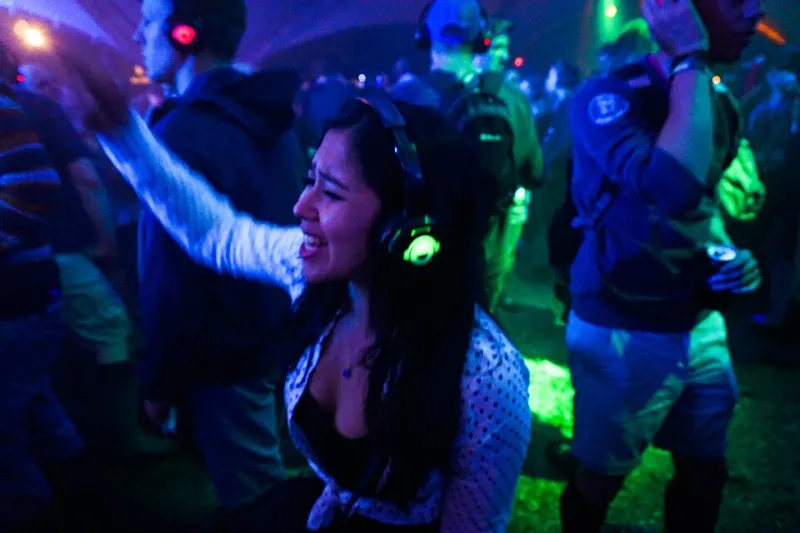
Noise is the other chorus. A coach with a microphone and a group of revellers is not silent, and councils and residents have long memories. Routes are planned around residential streets, not through them. Windows stay shut. Sound levels are monitored. Some operators use headphones for late-night legs, which sounds deeply unglamorous until you remember that a silent coach full of people singing along to their own headphones is one of the funniest sights in British nightlife.
Safety is where the good operators separate themselves. Passengers are told to stay seated. Aisles are not dancefloors, however much the lighting rig suggests otherwise. Stewards travel on bigger bookings. Accessible vehicles are booked in advance, not promised on the night. Drop-offs are planned street by street. ‘You are responsible for people who have been drinking and are excited,’ Priya says. ‘You have to be the adult in the room without killing the mood.’
The mic is a social experiment
What happens inside the coach is not just karaoke. It is a small social experiment with seatbelts. Groups arrive with their own hierarchies: the loud one, the shy one, the one who knows every word to every song, the one who insists they are only there for moral support. Twenty minutes in, the hierarchy dissolves. Someone requests a song nobody expected. Someone else discovers a talent for backing vocals. The driver becomes a therapist with a steering wheel.
Not everyone sings, and that is fine. Some passengers use the journey to decompress, staring out of the window while the lights slide past. Others treat the coach as a pre-party for the walk home. The best operators build in quiet corners as well as mic time. The point is not forced participation. It is permission.
There is a progressive case for this, too. A pre-booked coach is a bounded, known space. For women, queer people and anyone who has ever felt exposed at a taxi rank at 2am, that matters. It is not public transport and it is not a substitute for a functioning night bus, but it is a form of collective safety that happens to involve a lot of Abba.
The catch is cost. Splitting a private hire is not cheap, and the karaoke coach is not going to solve Britain’s transport deserts. It is an option for groups who can plan ahead and afford it. That makes it a brilliant nightlife innovation and a reminder that the last mile of the night out is still unevenly served.
Why the last journey became the main event
Nightlife has been squeezed from both ends. Venues close earlier, taxis cost more, and the journey home is often the least hospitable part of the evening. The karaoke coach flips that. It takes the dead time between club and bed and turns it into a room with a door, a soundtrack and a shared joke.
That is why the coach feels less like transport and more like a scene. The night out no longer ends at the taxi rank. It ends when the driver pulls up, the microphone goes quiet and someone says, ‘Same time next week?’ The last bus has become the first bass. The terminus is just another stage.