Fade to Bass: Britain’s Midnight Barbers Are Turning the Chair Into a Dancefloor
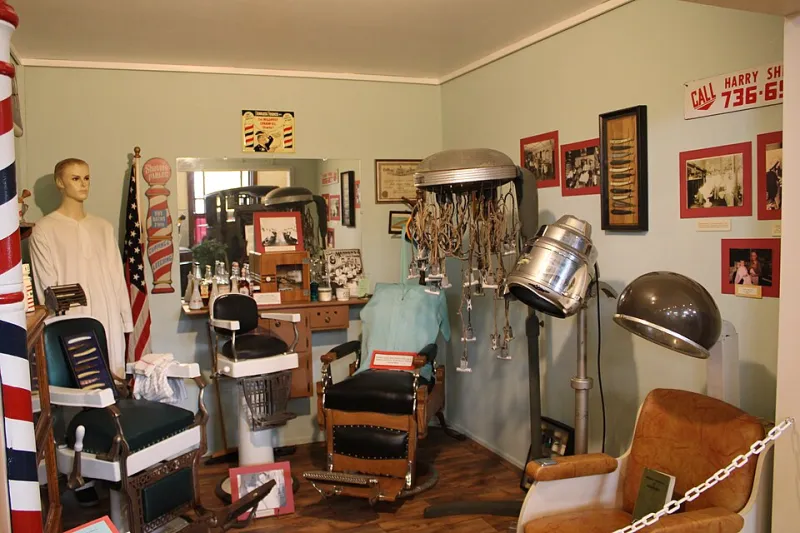
Photo: Chris Light, CC BY-SA 4.0, via Wikimedia Commons
It’s 11:40pm on a Thursday in Peckham, and the queue outside isn’t for a club. It’s for a haircut — or, more accurately, for the hour that follows it. Inside, a barber is finishing a skin fade while a DJ leans over a pair of Technics, easing into a slow, dubby record. The mirrors are still mirrors. The clippers are still clippers. But the room has shifted. Somewhere between the last appointment and the first encore, the barbershop has become a listening room.
This isn’t a gimmick cooked up by a nightlife promoter. It’s a quieter, stranger shift happening in small shops across the UK. In Bristol’s Stokes Croft, a two-chair barber hosts a monthly soul night. In Leeds, a Hyde Park shop runs ‘cut and listen’ sessions on Fridays, where the ticket price includes a trim and a can of something cold. In Glasgow’s Southside, a barber with a serious reggae collection has been known to keep the shutters down and the door locked for a handful of regulars after closing. None of them are trying to be clubs. That’s precisely the point.
The chair as a front row
“People want somewhere that doesn’t feel like a night out,” says Marcus, who runs a shop in Peckham and has been hosting late sessions since the idea first occurred to him during a quiet January. “They want to sit down, hear something good, maybe get their hair done, and not have to shout over a bassbin. The barbershop already does that. We just turned the lights down.”
The appeal is partly practical. Barbershops are small, familiar and already designed for intimacy — mirrors, chairs, a bit of chat. They’re also cheap to make atmospheric. A decent lamp, a decent sound system and a room full of people who actually want to listen can do more than a warehouse full of smoke machines. At a time when club tickets in major cities can cost more than a haircut and a takeaway combined, the midnight barber offers something rare: a night out with a built-in reason to be there.
Licences, neighbours and the 1am fade
None of this happens without friction. Barbershops are not nightclubs, and the licensing regime treats them accordingly. Some venues operate under a late-night refreshment licence; others rely on private, invitation-only events or keep things strictly alcohol-free to avoid tripping into regulated territory. Noise complaints are a real concern, especially in residential streets where the shop below a flat has been quietly clipping hair for a decade.
“We had one neighbour who was lovely about it and one who wasn’t,” says Nadia, who co-owns a shop in Bristol and hosts a monthly vinyl night. “We spent money on acoustic curtains and a decibel meter. We finish at midnight, not two. And we tell people on the door: this is a listening space, not a party. If you want to talk loudly, go to the pub.”
The result is a strange, tender kind of nightlife. People arrive, hang up their coats, sit on chairs that are meant for haircuts, and listen. There’s no dancefloor. There’s no sticky carpet. There’s a bin for hair clippings and a shelf of records, and somehow that’s enough.
The economics of a twenty-person room
Intimacy has its limits. A barbershop can hold maybe twenty-five people before it feels like a fire hazard with a playlist. That means ticket income is modest, and the economics have to be carefully balanced. Some shops charge £8–£12 on the door and use the money to pay the DJ and keep the lights on. Others bundle the event with haircuts, selling late appointments as part of the experience. A few have experimented with natural wine or low-alcohol drinks, but the margins are thin and the licensing headache can be worse than the profit.
“You’re not going to get rich,” Marcus says. “But you might keep the shop open and give people something they can’t get anywhere else. That counts for something.”
For younger barbers, the sessions are also a way to build a client base without shouting into the algorithmic void. A good night creates regulars. A regular who trusts you with their hair is worth more than a thousand flyers. For customers, the appeal is simpler: a haircut at 11pm, a drink, a record, a chat, and home by one.
Who gets the chair after dark
The crowds tend to be mixed — queer and straight, regulars and first-timers, people who work late and people who simply don’t want to go to a club. Several shops deliberately keep prices low and operate a no-photo policy to protect the atmosphere. Some offer alcohol-free options as standard, not as an afterthought. The vibe is less ‘exclusive’ and more ‘you’re welcome, but be normal’.
That ethos matters. Britain’s nightlife has been hollowed out by closures, licensing costs and the slow death of the mid-sized venue. The midnight barber isn’t a replacement for any of that. It’s a small, local answer to a big question: where do you go when you want to be out, but not out out? Where do you go when the club feels too loud and the pub feels too sad and your flat feels too quiet?
The morning after
By 1am, the chairs are back in position. The records are packed away. Someone is sweeping up. The mirrors reflect a room that looks, once again, like a barbershop. The magic is in how easily it switches back — and how much people seem to need it to switch at all.
“It’s just a haircut and a tune,” Marcus says, locking the door. “But people stay for hours. That tells you something.”
It does. Britain’s after-hours barbers aren’t trying to be the next big thing. They’re trying to be a small, good thing — a warm room, a decent sound, a chair that’s yours for an hour. In a nightlife landscape that keeps asking people to pay more for less, that might be the most radical offer of all.