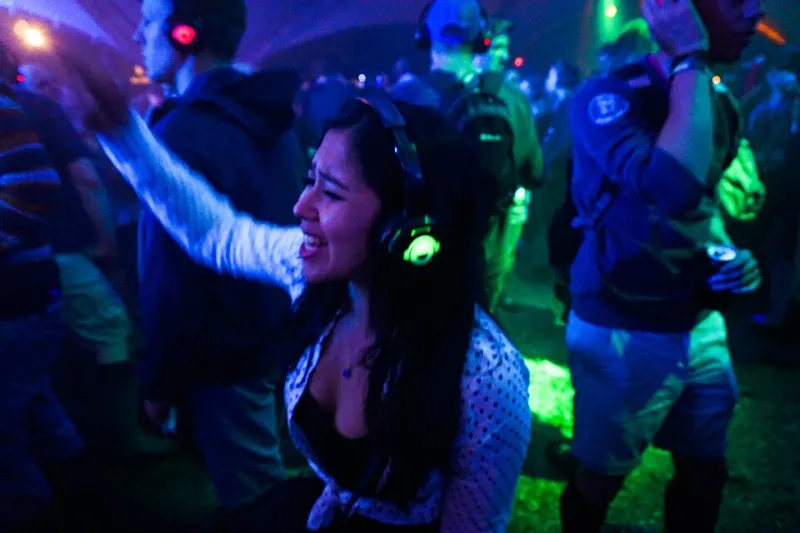
Night Miles and Neon Smiles: The Running Crews Ending Their Routes on the Dancefloor
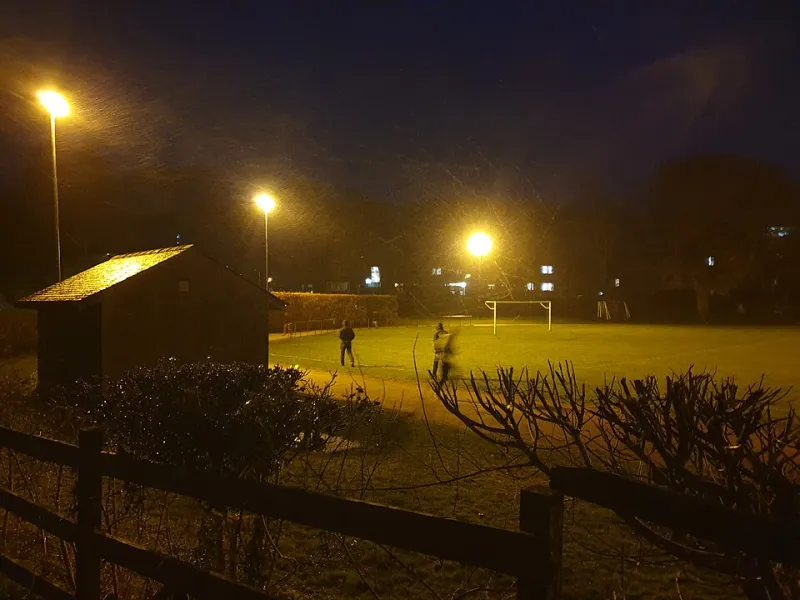
Photo: Oscar Taylor , CC BY-SA 2.0, via Wikimedia Commons
At 11.40pm on a Thursday in Manchester, a dozen people in reflective jackets are stretching outside a Northern Quarter coffee shop that closed hours ago. A Bluetooth speaker plays low-slung house. Someone is handing out glow sticks. A marshal with a clipboard is checking names. This is not a race, and it is definitely not a pub crawl. It is Pace & Bass, a monthly after-dark running crew that covers five kilometres through the city centre and finishes not at a bar but at a club, where a DJ is waiting and the dancefloor is the cool-down.
The Warm-Up Is the Point
‘We wanted the run to be the warm-up, not the whole night,’ says Maya Okafor, who founded Pace & Bass in 2024. ‘Loads of people in this city want to move, want to hear good music, want to be out late — but the default night out is still pints and a kebab. We are not anti-pint. We are pro-options.’
The format is simple: meet late, run a marked route at a conversational pace, regroup at the finish, then dance until the club closes. No headphones. No personal bests. Marshals front and back. A sweeper runner. A first-aider. Hi-vis is mandatory; so is a charged phone. The £12 ticket covers venue hire, insurance and the DJ. Any profit goes back into safety kit and subsidised places for under-25s.
It is one of a growing number of crews across the UK — from Bristol’s Moon Mile to Glasgow’s Late Lane — testing a hybrid that feels very 2026: fitness without the gym-bro energy, nightlife without the pressure to drink. The runs are social, the playlists are serious, and the finish line is a bassline.
Not a Pub Crawl With Extra Steps
On the pavement, I meet Tom Ellery, 29, a graphic designer who describes himself as sober-curious. ‘I still drink sometimes, but I got bored of every social event revolving around it,’ he says. ‘Here, nobody asks why you are not drinking. You are sweating. You are dancing. You are already doing something.’
That distinction matters. The after-dark running crew is not a novelty act bolted onto nightlife; it is a different way of moving through the city at night. Runners see the streets when they are quiet but not empty — past takeaway queues, bus stops, late-night pharmacists, club queues. The route becomes a kind of mobile venue. The city centre, usually something you hurry through to get to the night out, becomes the night out itself.
Organisers are careful about the cliché that this is just fitness for people who hate gyms. It is also a creative scene. Playlists are curated by local DJs. Some crews commission route artwork. Others pair runs with live percussion, spoken word or a short set from a local producer. The music is not background; it is the reason people keep coming back.
Safety, Licences and the Council Question
Late-night running is not without friction. Councils and police want to know about road crossings, noise, alcohol and crowd control. Venues want to know who is liable if a runner twists an ankle at 1am. Insurers want risk assessments. Most crews now work with local authorities rather than around them: notified routes, trained marshals, public liability cover and a strict no-alcohol-on-the-run rule.
Licensing is trickier. A run itself does not need a premises licence, but the after-party does. Crews either partner with an existing club or book a space with a late-night refreshment licence. Some use community venues and finish earlier. Others have experimented with outdoor dancefloors under temporary event notices. The paperwork is boring. The result is not.
‘The biggest misunderstanding is that we are a rave on legs,’ says Okafor. ‘We are a run with a party at the end. The safety planning is the boring, essential bit. If you get that right, the night takes care of itself.’
Who’s Actually Running?
The crews are not as uniform as the hi-vis suggests. There are seasoned clubbers who want to dance without a hangover. There are runners who have never felt comfortable in a nightclub. There are shift workers who finish at 10pm and want something to do that is not a drive-thru. There are people in recovery. There are people who just like the idea of a 5K that ends with a strobe light.
What they share is a willingness to look a bit ridiculous — neon armbands, sweaty hair, dancing in running shoes — and a preference for a night out that feels active rather than passive. The atmosphere is closer to a Sunday morning run club than a Friday night bar, but with better lighting and a proper soundsystem.
Where This Goes Next
Right now, after-dark running crews are small, local and mostly word-of-mouth. That is part of the charm. But the model is attracting attention from venues, mental-health charities and even transport bodies interested in safer late-night walking routes. The risk is that it gets branded, bottled and turned into a corporate wellness jaunt with a token DJ. The opportunity is that it stays weird, local and genuinely useful — a way to be out late without being sold another drink.
Back in Manchester, the run finishes at 12.25am. Runners queue for water, change into dry T-shirts and file into a basement club where the DJ is already three tracks deep. The dancefloor fills slowly, then all at once. Nobody is checking a watch. The night has only just started.