Laugh Track to Bassline: Inside the 1AM Changeover Reshaping Small-Town Nights
Photo: empty comedy club stage with microphone stand and stacked chairs at night, small venue bar in background, via wallpaperaccess.com
At 12.52am in a comedy club in a town that could be Preston, or Stockton, or anywhere with a good chippy and a bad taxi queue, the last comic is still doing the bit about his dad's shed. By 1.20am the mic stand is in the back corridor, the chairs are stacked against the wall in threes, and a DJ is plugging a laptop into a sound desk that spent the evening amplifying a punchline about Wetherspoons. Nobody has gone home. Nobody is being asked to.
This is the quiet second act of the British comedy club: same room, later licence, different art form. Programmers who once packed up at 11pm are now running music nights, cabaret, spoken word and straight-up club sets in the same four walls, often with the same staff and the same bar. It is not a revolution. It is a spreadsheet decision that has accidentally produced one of the more interesting nights out in the country.
One room, two shifts
The logic is unforgiving and obvious. A comedy club is a room that sits empty for roughly eighteen hours a day and pays rent for twenty-four. A 200-capacity basement with a decent PA, a bar and a green room is, functionally, a small music venue. Once you have the late licence and the soundproofing, keeping the door open until 2am costs you a DJ fee, a couple of extra door staff and the electricity on the lights.
What you gain is a second audience. Comedy crowds skew a certain way: they arrive early, they drink steadily, they leave in a lump at chucking-out time. A late music slot catches the people who would not sit through a stand-up bill but will happily pay six quid to see a local selector play records in a room with a carpet.
The changeover, minute by minute
Anyone who has worked a venue will tell you the show is not the hard part. The changeover is. In the better-run rooms it looks like this: house lights up at the end of the last set, a clear announcement about what is happening next and what the ticket situation is, then a small crew of three or four who know exactly where everything lives. Mic, stand, stools and monitor wedges out. Desks and turntables in. Front barrier removed. Lighting preset recalled. The whole thing, if nobody gets in the way, is done in twenty-five minutes.
The danger zone is the bar. Two audiences in one room at 1am need two sets of expectations. Comics' crowds are used to being shushed. Dance crowds are not. Programmers I spoke to were unanimous that the handover needs a clean break, ideally a break in the music and a bit of theatricality, so the room understands it has changed shape rather than just got louder.
The crowd that stays
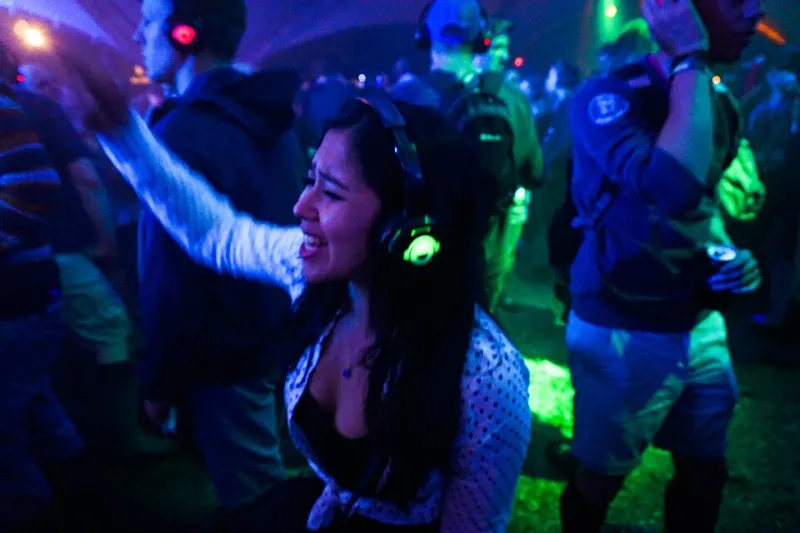
Here is the genuinely interesting bit: a lot of people do both. The crossover is real, and it is not just die-hard comedy fans. It is the couple who booked a Friday bill and stayed because the music was free with their wristband. It is the group who came for the DJ and wandered in early for the support act, then got hooked on a comic doing five minutes about the bus station.
Performers have noticed. More than one comic now finishes a set and then DJs, and the audiences seem to enjoy the whiplash. A comic who has spent forty minutes building and releasing tension in a room is, it turns out, oddly well equipped to warm up a dancefloor. They know the value of a pause.
The neighbours and the licensing officer
The practical obstacle is rarely the audience. It is the building. Towns that lost their music venues over the last two decades did not lose them because nobody wanted to dance. They lost them because a flat got converted next door and somebody started counting decibels.
Comedy rooms have an advantage here: most of them already fought and won the noise argument years ago, because a laughing crowd is loud too. Promoters who add late music often find the council more receptive than expected, provided the plan is honest about capacity, door staff ratios and what time the back gate opens. What councils do not like is a comedy licence quietly being used as a nightclub licence. Be straight about the change, and the paperwork tends to follow.
The economics of a second shift
The numbers are modest but they matter. A late music slot might add a few hundred pounds of bar take and a small ticket surplus on a night that was previously dark. Multiply that across a town with two or three rooms doing it and you get something bigger: a reason for people to stay in the centre after 11pm, which is the exact thing every high street regeneration report has been pleading for since about 2010.
It also keeps staff in work. The bar team, the door team, the sound engineer, the person who does the posters: a second shift turns a four-hour job into a proper night, and in a small town that is how you keep good people instead of losing them to Manchester.
A note of caution
None of this is frictionless. Rooms built for speech do not always sound good with a sub in them. Staff get tired. A comedy club that goes too hard on club nights can alienate the regulars who come for the quiet. The ones making it work tend to keep music to one or two nights a week, keep the comedy bill as the identity of the place, and treat the late slot as a bonus rather than a pivot.
But watch a room at 1am, half full of people who came for a laugh and stayed for a bassline, and it is hard to argue with. Small rooms, used twice. In this economy, that is practically a movement.