Petal Tones: Britain's All-Night Flower Trade Is Learning to Dance
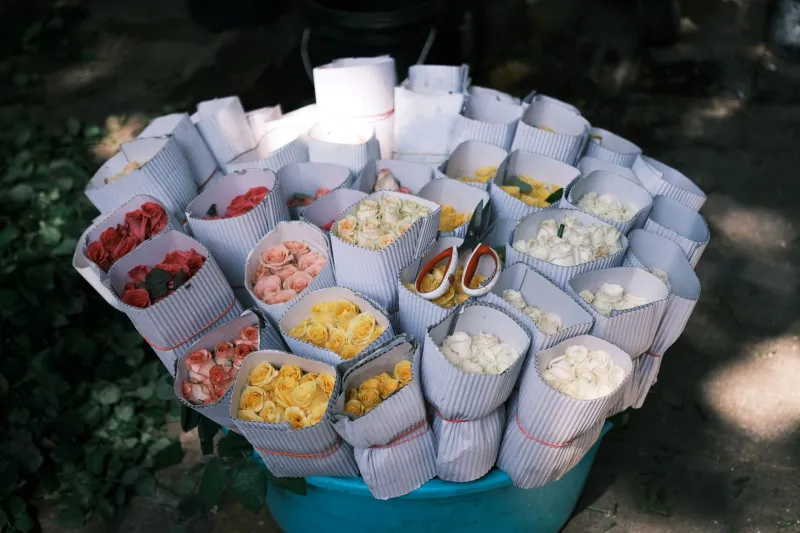
There is a particular smell at four in the morning inside a flower market. Not the polite, perfumed version you get from a bouquet on a windowsill — something greener and wetter, like a fridge full of garden. Cut stems, cold water, damp cardboard, a faint sourness from the bins. It is not a smell anyone would bottle. But stand in it for an hour with a bassline running underneath and it starts to do something strange to your sense of time.
That collision — chlorophyll and subwoofers, grower's twine and dub — is the whole premise of a small, scattered scene that has been building across the UK this year. Florists, wholesale traders and the promoters who love them have worked out that a room full of flowers after midnight is one of the warmest, strangest, most unexpectedly danceable spaces a city has to offer.
The bucket change at 3AM
Most of Britain's flower trade runs on a schedule that would horrify a club promoter. Wholesale markets open in the small hours so that shops and stalls can restock before the morning rush. Staff arrive when the last buses are still running, work fast and hard, then go home to sleep while the rest of us are eating lunch.
It is, in other words, a built-in after-hours audience. And a captive one. "You've got a hundred people on site at two in the morning who have nowhere to be," says Nadia Okafor, who runs a stall at a wholesale market in the Midlands and started putting on sets in the loading bay last winter. "We were playing music anyway. Someone brought a speaker. Then someone brought a better speaker."
The format is loose by design. A couple of decks on a trestle table. A friend's mate on the aux. Sometimes a saxophone, occasionally a cello, once — memorably — a florist doing a live ambient set from inside a walk-in chiller because it was the only quiet corner in the building. Nobody is selling tickets. Nobody is checking a guest list. The crowd is whoever happens to be there: traders, drivers, night-shift nurses on their way home, taxi ranks emptying out, the occasional bemused early-morning buyer who came for roses and stayed for acid house.
Why flowers make a good room
There's a practical logic here before there's an artistic one. Flower halls are big, cheap to heat (or rather, they're already cold, which is a blessing at 4AM), acoustically odd but forgiving, and covered in soft surfaces that soak up reflections. Buckets and foliage break up sound in a way that makes a mediocre PA sound far better than it has any right to. It's the opposite of the concrete bunker. It's a hedge, basically, with a ceiling.
Then there's the light. Markets are lit for work — flat, bright, unforgiving — but florists have been quietly mucking about with it. Colour-washed LED strips wrapped round the buckets. A single warm lamp over the decks. The result is a palette you don't get anywhere else in clubland: hot pink against fern green, orange lilies picking up a blue strobe.
And the smell. That's the part everyone brings up. Clubbers are used to fog, sweat and the ghost of a cleaning product. Flowers do something else entirely. "People keep saying it feels like a different kind of night out," says Tom Mercer, a promoter in Bristol who has been programming small sets at a 24-hour flower stall near the harbourside. "It's the same bass, the same dancing, but your body reads the room as calm. You come out smelling of lilies instead of cigarettes."
That's not a small thing. A lot of the thinking around late-night culture in 2026 has been about making nights feel less punishing — softer endings, better lighting, places to sit, air you can breathe. Flowers do all of that for free.
The florist-DJs
What makes the scene more than a novelty is who's actually playing. A good chunk of the line-ups are people who work the market. Naz, a driver who does the 2AM run from the Netherlands three nights a week, has become a fixture on the decks in Leeds — all slow, murky dub techno that suits a room where everyone is carrying something heavy. Priya in Glasgow runs a stall and a monthly night, and is strict about one thing: the music stops for the morning rush.
"At half six we turn it down," she says. "That's not a mood thing, that's respect. The mums come in at half six. They don't want a kick drum with their tulips."
There's a real ethic in that. The after-hours sets are guests in a workplace, and the best of them behave like it. No bar, no wristbands, no queue blocking the loading bay. Money, where it changes hands at all, goes in a bucket or a QR code taped to a pillar, split between the players and the staff tea fund.
Not quite a movement yet
It would be easy to over-egg this. There are maybe a couple of dozen regular events across the country, most of them small, many of them irregular, quite a few of them technically unofficial. Councils have not always been relaxed about amplified music in wholesale premises at three in the morning, and some have been moved on.
But the appetite is obvious, and it isn't only about music. Night workers are chronically underserved by a city's cultural offer — everything is shut when they finish. A flower hall that stays open, plays something interesting and lets you stand around with a mug of tea is a genuinely radical piece of infrastructure.
What happens next probably depends on whether the trade sees value in it. Some market managers are wary. Others have noticed that a well-run late set brings in a different kind of customer at a different hour, and that a florist with a following sells more buckets than one without.
Where to find it
The honest answer: ask. These nights live on word of mouth and a couple of Instagram accounts, and they don't advertise widely for the obvious reasons. Start with your nearest wholesale market and find out when it opens — most will let you wander in if you're polite and buy something. Columbia Road on a Sunday morning is the famous version of this energy, but the real thing, the 3AM version, is happening in Leeds, Bristol, Glasgow, Birmingham and a handful of London halls where nobody's taking photos.
Go once. Buy a bunch of something cheap on your way out. Walk home in the light as the city starts up again, smelling faintly of greenery, ears still ringing. There are worse ways to end a night.