Sprinkles After Last Orders: The Van Waiting at the Curb
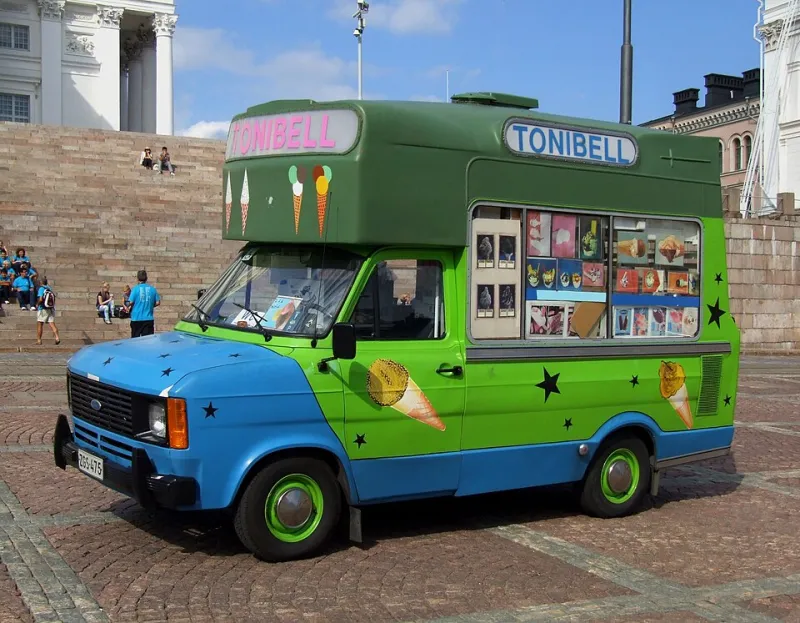
Photo: Pudelek (Marcin Szala), CC BY-SA 3.0, via Wikimedia Commons
There is a moment, somewhere between the last track and the first taxi, when the night could go either way. The air is cold, the pavement is sticky, and the group chat is deciding whether to call it. Then you hear it: a few tinny bars of a nursery rhyme, drifting down the high street like a rumour. The ice cream van is open. Not for children on a summer afternoon, but for the stragglers, the smokers, the ones who cannot quite face the bus yet. It is a strange and deeply British sight, and it is becoming a fixture of the late-night economy.
The chime that means home
The ice cream van has always been a bit of a shapeshifter. Since the early twentieth century, when Italian-British families turned second-hand vans into mobile parlours, it has been a suburban signal, a seaside treat, a soundtrack to childhood. But the after-dark version is something else entirely. It arrives when the kebab shop queue has peaked and the taxi rank has stalled. It is not really about hunger. It is about punctuation. A 99 with a flake is a full stop, a small ceremony that says the evening is over and the walk home has begun.
Drivers know this. The ones who work the late shift talk about routes the way DJs talk about sets: where to park, when to move, which streets will still have people on them at 2.45AM. A spot outside a busy club is obvious, but it is also fragile. Councils can be twitchy about noise, residents can be twitchy about everything, and a single complaint can turn a reliable pitch into a no-go. So the van drifts. It finds the gap between the taxi rank and the takeaway, the side street where the door staff take their break, the corner where the night bus stops.
A route built around last orders
Licensing is the unglamorous engine of all this. Selling food late at night can require a late night refreshment licence under the Licensing Act 2003, and street trading consents vary wildly from one local authority to the next. Some councils are relaxed; others treat a van like a nightclub with wheels. Noise abatement notices, parking restrictions, cumulative impact zones – the paperwork is enough to make you want to lie down in the freezer. Yet the vans keep coming, because the demand is real and the margins, if you get it right, are not terrible.
The economics are not for the faint-hearted either. Diesel, insurance, pitch fees, stock, the sheer cost of keeping a freezer running through the small hours. A cone that costs three or four quid has to carry a lot of overhead. But the late shift has one advantage: a captive audience. At 3AM, the choice is not between an ice cream van and a nice dessert. It is between an ice cream van and nothing. That is a powerful position to be in.
Sugar as a night-time utility
There is something quietly progressive about all this, even if it does not look it. Night-time culture is not just clubs and gigs. It is the whole ecosystem of people who make the city work after dark: the cleaners, the drivers, the door staff, the medics, the ones who finish at 4AM and just want something sweet before bed. The ice cream van serves them too. It is soft infrastructure, wrapped in a freezer and a slightly wonky menu board.
And it is not only about the sugar. The van is a meeting point. You queue next to strangers and end up in a conversation you would never have had indoors. You learn someone’s name because they are arguing about whether a Screwball is worth the brain freeze. It is the opposite of a VIP area. It is a small, democratic little stage where everyone is equal in their slightly ridiculous desire for a whippy at an unreasonable hour.
The drivers who keep the night sweet
The people behind the counter are part of the story. Many are family businesses that have been doing this for decades, shifting from daytime estates to late-night pitches as the economics changed. They know the doormen, the taxi marshals, the street cleaners. They know which nights are messy and which are quiet. They are, in their own way, night workers like any other, except their job comes with a chime.
There is a practical magic to it. The van becomes a landmark: a lit rectangle in a dark street, a place to wait, a place to be seen. For anyone who has ever felt a bit vulnerable at the end of a night out, that matters. It is not a solution to the problems of the night-time economy, but it is a small, useful thing. A cone, a chat, a bit of warmth before the walk home.
So next time the chime cuts through the cold at 3AM, do not roll your eyes. Roll up. The ice cream van has become the real after-party: not loud, not exclusive, just there. And honestly, that is exactly what the end of the night needs.