The Quiet Rave: How Britain’s All-Night Launderettes Found a Second Life After Last Orders
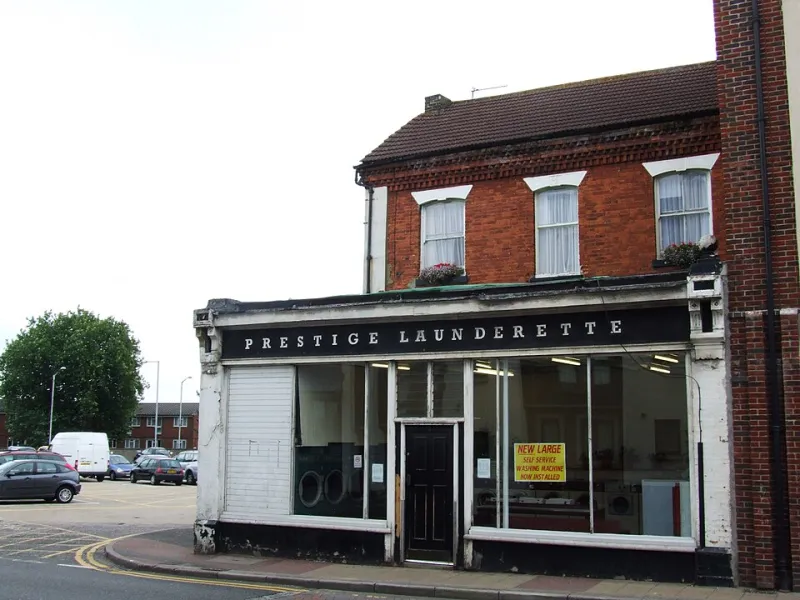
Photo: Chris Whippet , CC BY-SA 2.0, via Wikimedia Commons
The last bright window on the high street
At 1.40am, most of the high street is doing its familiar after-hours impression of a film set that has wrapped for the night. Shutters down, bins out, one lonely taxi idling outside a kebab shop. Then there is the launderette: fluorescent, warm, humming, and somehow more inviting than half the bars you walked past on the way home.
That is the setting for one of the more unlikely nightlife developments in Britain right now. Across the country, all-night launderettes are being used as after-midnight listening rooms — places where people bring records, play low-key DJ sets, drink tea from a polystyrene cup and let the tumble dryers provide the low end. Not a club. Not quite a gig. Something closer to a living room with better ventilation and a coin slot.
The appeal is not difficult to understand. By the time pubs call last orders, plenty of us are not ready to go home but also not ready for a £17 cocktail or a dancefloor that smells of Red Bull and regret. We want somewhere warm, bright and open. Somewhere you can sit down without buying a bottle. Somewhere the music does not have to compete with a thousand shouted conversations. A launderette, weirdly, fits the brief.
Soap, suds and soft selectors
The format is loose, which is part of the charm. Some nights are proper listening sessions: a stack of vinyl, a borrowed turntable, perhaps a small mixer, and a crowd of people who have agreed — implicitly, at least — to shut up during the good bits. Others are more like gentle DJ sets, with someone playing dub, soul, ambient, dubstep at half speed, or whatever else suits a room full of washing machines and plastic chairs.
What you will not usually find is a full bar. Sometimes there is no alcohol at all. That is not an accident. Sober and sober-curious nights have been growing for years, and the launderette offers something the average pub cannot: a plausible reason to be out late that does not revolve around drinking. You can wash a load of towels. You can listen to a record. You can talk to a stranger without having to lean into their ear and shout about the weather.
The machines do a lot of the atmospheric work. A spin cycle is not exactly a kick drum, but it has a rhythm. The dryers rumble and sigh. Coins clatter into the slot. There is a steady, industrial hum that softens the edges of the room and makes even a slightly awkward silence feel like part of the composition. It is ambient music that you cannot download, and it comes free with a service wash.
Licensing, neighbours and the practical stuff
None of this happens by magic. A late-night launderette is still a business, and a business that opens after dark has to think about licensing, noise and neighbours. The good operators are careful. They keep the volume modest. They close the doors. They talk to the people in the flats above. They make sure the night does not turn into an unofficial club night with a queue down the pavement and a bassline rattling someone’s bedroom wall.
In practice, that means small capacities and low overheads. A launderette does not need a huge sound system or a headline DJ. It needs a decent turntable, a few lights that are not aggressively fluorescent, and a crowd who understand that they are guests in someone else’s workplace. Some sessions are ticketed, some are donation-based, some are just word-of-mouth things that happen because the owner is a music fan and the room is already there.
The licensing question varies across the UK. A listening session without alcohol, dancing or amplified music might sit in a very different category from a late-night bar. But councils and neighbours are alert to anything that looks like a venue by stealth. The launderette nights that last are the ones that stay honest about what they are: small, quiet, community-minded, and not trying to replace the club.
A gentler model for the after-dark hours
This is where the launderette model gets interesting. For years, British nightlife has been squeezed by rising costs, stricter licensing and a general sense that the late-night high street is either expensive or extinct. The launderette nights suggest another way: use the rooms that already exist. Keep them bright. Keep them warm. Keep them cheap. Let the music be soft enough to talk over, or good enough to listen to properly. Do not make people pay £6 for a lukewarm lager to justify their presence.
It is not a solution to every problem. It will not replace clubs, gigs or the glorious chaos of a proper dancefloor. But it does offer something that has been in short supply after midnight: somewhere to go that does not demand you perform. You can be tired. You can be sober. You can be on your own. You can be waiting for a wash cycle to finish while someone plays a Marion Black record and the dryer next to you thumps along like a reluctant percussionist.
In 2026, the British night out is being rebuilt in all sorts of odd places — car parks, barbers, arcades, roller rinks. The all-night launderette is one of the quietest additions to that list, and one of the most sensible. It is nightlife as infrastructure: warm, useful, slightly surreal, and open when you need it. The spin cycle is not a drop. But it might just be the sound of a softer kind of Saturday night.